
Safety & Stats
Safety & Stats
Mountain Safety & Stats
GENERAL SAFETY INFORMATION
Safety is of the utmost importance at Copper Mountain. Click through the tabs to find information about terrain and weather, Patrol, Your Responsibility Code, the Colorado Ski Safety Act, Champion the Slopes, Terrain Park Safety, LiftSafety, Deep Snow Safety and Allowed Devices.
IMPORTANT PHONE NUMBERS
- Ski Patrol: 970.968.3311
- Security: 970.390.6888
- After hours or base area emergency: 911


KNOW THE CODE — IT'S YOUR RESPONSIBILITY.
- Always stay in control. You must be able to stop or avoid other people or objects.
- People ahead or downhill of you have the right-of-way. You must avoid them.
- Stop only where you are visible from above and do not restrict traffic.
- Look uphill and avoid others before starting downhill or entering a trail.
- You are responsible to prevent runaway equipment.
- Read and obey all signs, warnings, and hazard markings.
- Keep off closed trails and out of closed areas.
- You must know how and be able to load, ride, and unload lifts safely. If you need assistance, ask the lift attendant.
- Do not use lifts or terrain when impaired by alcohol or drugs.
- If you are involved in a collision or incident, share your contact information with each other and a ski area employee.
PERSONAL RESPONSIBILITY AND SAFE SKIING AND RIDING
Winter sports involve inherent risk which can lead to serious injury and death. While Copper uses marking devices on ski trails including but not limited to bamboo, signs, fencing, rope, and padding, not all potential obstacles and hazards and marked. Padding may not prevent serious injury if struck. It is part of your responsibility, under “Your Responsibility Code” and the Colorado Ski Safety Act, to avoid all obstacles and hazards.
Your knowledge, decisions and actions contribute to your safety and that of others, and personal awareness and common sense can help reduce certain elements of risk related to skiing, snowboarding, and biking, particularly as it relates to ability level, skill development, hazards, fitness, and hydration and nutrition. Ski, ride, and bike within your ability level, be Park Smart while enjoying terrain parks and bike trails, get ready for skiing, riding and biking by improving your strength, stamina, and reflexes, and stay hydrated and fueled for your mountain adventure.
Fast and/or reckless skiing, riding or biking can result in injury to you or to others, and may result in the loss of lift access privileges. Slow down in designated areas marked “SLOW” and go no faster than the general flow of traffic.
Collisions
Ski and ride responsibly, and maintain space around you. Under the Colorado Ski Safety Act, the skier or rider in front of you has the right of way, and it is your responsibility to avoid people downhill. If you are involved in a collision, state law requires you to stop and provide your name and address to the other person or to a Copper Mountain employee. Make every attempt to avoid a collision! If you must leave the scene to get help for the injured person, give your name and contact information after you get help.
Closed Terrain
Terrain may be closed for any number of reasons, including hazardous snow conditions and avalanche mitigation (snow safety) operations. Trails and areas are closed for your safety, and ignoring these messages can put you (and your fellow guests) at greater risk.
- It is forbidden to enter (via skis, snowboard, bike or foot) any trail or area that has been closed by a rope or is marked with a “CLOSED” sign at the top of the trail. It is your responsibility to know what terrain is closed. Skiing through trees, or entering closed terrain from below, are both forbidden and put you, other guests.
- Violator’s pass may be revoked for the season, and, as a violation of the Colorado Ski Safety Act, It is a class 2 petty offense punishable by a max fine of up to $1,000.
- Copper has one USFS backcountry access gate on the mountain, which is listed on our trail map. NEVER go under a closure or boundary rope.
Be advised that Copper Mountain does not mark all potential obstacles or hazards. When marked, poles, flags, fencing, signage, padding or other forms of marking are used to inform the skier/rider of the location of a potential obstacle or hazard. These markers are no guarantee of your safety. It is part of your responsibility, under “Your Responsibility Code” and the Colorado Ski Safety Act, to avoid all obstacles and hazards.
Monitor terrain status by checking our Trail and Lift Info webpage, or on the Copper Mountain App.
Patrol (Ski & Bike Patrol)
In the event of an on-hill emergency, call Patrol at 970.968.3311.
Copper Mountain Patrol works to provide efficient & professional emergency response to medical and injury incidents at Copper Mountain. In addition, Patrol:
- Educates, monitors, enforces and provides positive reinforcement of Your Responsibility Code and the Colorado Ski Safety Act.
- Increases guest and employee awareness of safety initiatives through on-mountain activities like Safetyfest.
- Promotes the “Champion the Slopes” campaign to guests.
- Leads avalanche mitigation work.
Mountain Safety Patrol assists Patrol to support guest and employee safety activities, including monitoring slow zones and high traffic areas across the resort.
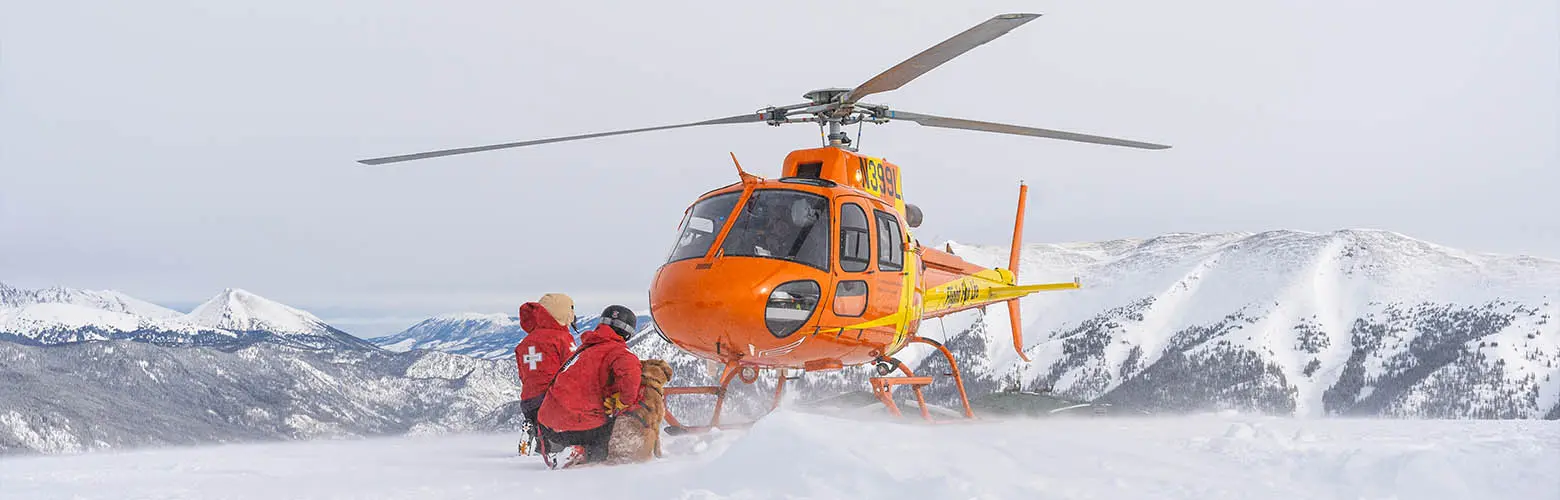
Rounding out the team are Copper Mountain’s well-trained Avalanche Rescue Dogs.
CommonSpirit Emergency and Urgent Care Copper - Winter Only
- Located in Center Village at 860 Copper Road, Copper Mountain, CO 80443
- Phone Number: 970.968.2330.
- Winter Hours: daily: 8:30am-4:30pm
The Clinic is staffed by physicians, nurses, and X-ray technicians. This facility offers guests and employees of Copper Mountain a direct link and a seamless experience to advanced medical services. CommonSpirit Emergency and Urgent Care Copper, a Centura Health Facility, is independent of Copper Mountain Resort.
HIGH ALTITUDE ENVIRONMENT
Our alpine environment is very fragile. Please don't pick the wildflowers, and stay on designated trails! The base of Copper Mountain is at 9,712', and the elevation at the summit is 12,441'. This means that there is less oxygen available to your body with each breath than there is at sea level, and some people experience the effects of altitude during their first couple of days more than others. Symptoms may include headache, nausea, dizziness, poor sleep, coughing and/or difficulty breathing. Here are some suggestions for managing the higher elevation of Colorado and Copper Mountain:
- Keep exercise moderate in the first few days, until your body has had time to acclimatize a little.
- Sip water throughout the day, you will likely need to drink more water than normal.
- Eat nutritious foods high in complex carbohydrates and limit your intake of alcohol and caffeine.
- Most people find altitude symptoms to be mild, however, seek medical attention if symptoms worsen, are severe, or persist.
- Be aware of the weather forecast and what is happening in the sky. The weather can be unpredictable in both the winter and summer months, and can change very quickly. Be prepared for any type of weather condition with adequate clothing worn in a layered fashion to help control body temperature. In the summer months, seek shelter from approaching storms.
- The UV rays are stronger at altitude, with less of Earth's atmosphere to filter them. Sunscreen, eye protection, sun hats in the Summer, and wearing pants and long sleeves can help protect you from these rays, even on cloudy days.
- On very cold days, keep all skin covered, including your nose and cheeks, to reduce your chances of frost nip or frostbite. Ski with a buddy and check each other for discolored spots on exposed skin. Should you see discoloration, gently cover the skin and get inside quickly. Call Patrol should you need assistance.
- During the Summer, please don't pick the wildflowers, and stay on designated trails!
WALKING SURFACES
The same weather conditions that create the snow surface for you to enjoy skiing and riding can also make our base area and walking surfaces slick. Paved and gravel parking lots, sidewalks and pathways, and outdoor stairs may be covered by ice or snow at any time. In addition, the walking surfaces can become uneven or wavy due to alpine conditions and freeze-thaw cycles.
Just like snow tires perform better on snow- and ice-covered roads, winter-specific footwear is important to reduce the risk of slips, trips, and falls in the wintertime. Winter footwear are made with waterproof materials and traction soles. Ski boots often don’t provide good traction – Copper Mountain recommends the use of removable tracks for walking in all ski boots. Slow down as you move around the resort, and enjoy the mountain air and views.
In the summer months, the weather can be variable. Wear footwear suitable for your planned activity. Wear sturdy hiking boots or trail shoes while hiking and running on the mountain. If you are road biking through Copper and are wearing road bike shoes, please be extra careful walking as road bike shoes generally have smooth plastic soles that are very slippery on all walking surfaces.
Encountering Wildlife
Throughout the year, Copper Mountain is home to an array of wildlife. A huge variety of birds, mule deer, moose, elk, and bears are commonly seen around Copper Mountain, with mountain lions and lynx rarely making themselves visible. To keep yourself and our wildlife safe:
- Never approach or touch wildlife
- Never feed wildlife
- Maintain a safe distance, leave the animal an escape route
- Please don't attempt to take selfies
Know Before You Go — check out further information on encounters with wildlife from the U.S. Forest Service.
Helmets
Copper Mountain encourages all guests to wear a helmet while skiing and riding. Copper Mountain requires all guests who are riding in the bike park to wear a helmet, and strongly recommends that riders choose a full-face helmet.
While helmets may mitigate or reduce the severity of some head injuries, their use does not guarantee safety and will not prevent certain injuries. The National Ski Area Association emphasis the importance of helmets and has partnered with the "Lids on Kids" organization. For more information please visit www.lidsonkids.org to find out how to find the best helmet for your child.
For more information on safety, please click the button below.


