Safety & Stats
Safety & Stats
Mountain Safety & Stats
LIFT RIDING
During winter and summer operations, skiers, riders, bikers, and foot passengers must know how to load, ride and unload the lift safely. Copper Mountain has a variety of lifts to get guests up the mountain – chairlifts, gondola, magic carpets, T-bar, and poma style lifts. Not sure what these are, or how to ride them? Ask a lift operator!
Under Colorado law, you may not use a lift or any ski trail while under the influence of illegal drugs or alcohol, and you cannot board a lift unless you have sufficient physical dexterity, ability and knowledge to negotiate or to use such lift safely or until you have asked for and received information sufficient to enable you to use the lift safely. If you need assistance or have questions about riding a lift, please communicate with our Lift Operations personnel. In the winter, consider taking a ski lesson to improve your lift loading, riding, and unloading skills.
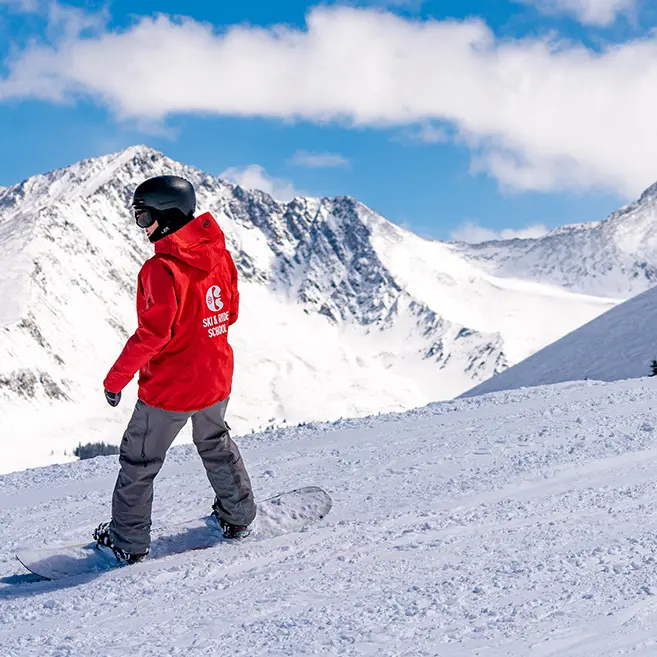
Our lift operators are knowledgeable and are happy to answer any of your questions. Consider taking a Ski and Ride School lesson if you are unsure about lift riding.
BACKPACKS & LIFTS
Copper Mountain strongly recommends that guests remove both backpack straps and carry them on their laps while riding a chair lift. The pack does not allow the skier or rider to sit with their back against the back of the chair which could contribute to an unseated passenger incident, and backpack straps can become entangled and interfere with the unloading process. Our lift operators may remind guests to do so and are willing to slow or stop the lift upon request in order for any guest to remove the backpack from their back. If you have any questions about loading, riding, or unloading a chair lift please ask the lift operator.
TERRAIN & WEATHER
1. TERRAIN DIFFICULTY
Skiers and riders should be advised that a green circle, blue square, or black diamond trail at Copper Mountain is not necessarily the same as a green circle, blue square or black diamond trail at other resorts. The system is a relative rating of trails at each resort and does not compare trail difficulty between resorts. Skiers and riders should begin with the easiest terrain and then move up in difficulty as their ability permits.

EXTREME TERRAIN
Extreme Terrain contains cliffs, very steep slopes as well as rocks and other hazards. Skiing or boarding Extreme Terrain is for EXPERTS ONLY and marked with this symbol.

2. Trees, Tree Wells, & Deep Snow
Pay attention at all times when skiing or riding in or adjacent to trees. During the season, particularly early and late season, snow can be minimal in places, especially in heavily wooded areas. It is recommended to move cautiously through these areas. Skiing with a buddy is recommended when skiing in the trees.
Skiing and snowboarding in the trees and in deep powder is one of the most exciting parts of the sport for skiers and riders with the appropriate experience. However, if you decide to leave the groomed trails for turns in the powder, you are accepting the risks of tree wells and deep snow immersion. A tree well is a void or depression that forms around the base of a tree and can contain a mix of low-hanging branches, loose snow, and air. Evergreen trees in particular (fir, hemlock, etc.) can have large, deep tree wells that form when low-hanging branches block snow from filling in and consolidating around the base of the tree. These voids can be hidden from view by the tree's low-hanging branches.
Deep snow or tree well immersion occurs when a skier or rider falls into an area of deep unconsolidated snow and becomes trapped or immobilized and may suffocate, causing injury or death. Deaths resulting from these kinds of accidents are referred to as a NARSID or Non-Avalanche Related Snow Immersion Death. Become educated on how to reduce the risk of NARSID through your own action and awareness. The website www.deepsnowsafety.org is intended to assist all skiers and riders in learning about the risks and prevention of deep snow immersion accidents.
Copper strongly recommends always skiing or riding with a friend, especially on powder days and when skiing or riding in the trees.

3. Avalanche Terrain
Despite Copper's thorough avalanche mitigation efforts, avalanches can still occur inbounds at Copper Mountain. Educate yourself, have a plan, and practice safe travel techniques, particularly while skiing or riding in avalanche-prone terrain. In the event you witness or are involved in an avalanche at Copper Mountain, alert ski patrol immediately. Check out this video to learn a little more about our snow compaction program at Copper Mountain and how you, as skiers & riders, contribute to making a solid and safe snowpack.
4. FREESTYLE TERRAIN

At Copper we have a number of terrain parks for your enjoyment. The parks are identified as having Extra Small, Small, Medium, and Large Features. Start small and work your way up. If you would like some professional instruction visit Woodward At Copper for specially designed classes and coaching where progression is the focus. Copper reinforces Park Smart approach for our terrain park users:
- START SMALL - Work your way up. Build your skills.
- MAKE A PLAN - Every feature. Every time.
- ALWAYS LOOK - Before you drop.
- RESPECT - The features and other users.
- TAKE IT EASY - Know your limits. Land on your feet.
FREESTYLE TERRAIN WARNINGS & INSTRUCTIONS:
- Trail ratings do not apply to terrain features.
- Inspect terrain features before use.
- You are the sole judge of your ability to use any terrain feature, work your way up.
- Terrain feature shapes and surface conditions change with weather and use.
- Use spotters when the landing area is not visible.
- Do not stop on landing areas.
- Use of features can be dangerous; you assume all risks of injury or death.
- Inverted aerials are not recommended.
*Each feature can be broken down into 4 zones. Identify these zones and have a plan before using any Freestyle Terrain.
Approach zone is the space for setting your speed and stance to use the feature.
Takeoff zone is for making moves that start your trick.
Maneuver zone is for controlling your body in the air and setting up for landing.
Landing zone is the prepared slope between the knuckle and the runout beyond it.

5. Family Ski & Slow Zones
Families have a special spot Copper. You will see on the Copper Mountain Trail map that we have specifically identified ski runs that are Slow & Family Zones. These tend to be more gentle slopes for slow family skiing. Additionally, we have identified Slow Zones in some higher traffic areas, and where approaching a busy intersection of trails or nearing lift-loading areas where slower speeds make a safer experience. Please observe the posted slow areas by maintaining a speed no faster than the general flow of traffic. Space and speed are especially important in these areas. Fast and aggressive skiing will not be tolerated and may result in the loss of lift access privileges.
6. Variable Conditions
Keep an eye out for rocks, stumps, roots, and other hazards, both marked and unmarked, on the trail at all times. Trail conditions on the mountain can and do change constantly so it is important to remain aware of your surroundings at all times.
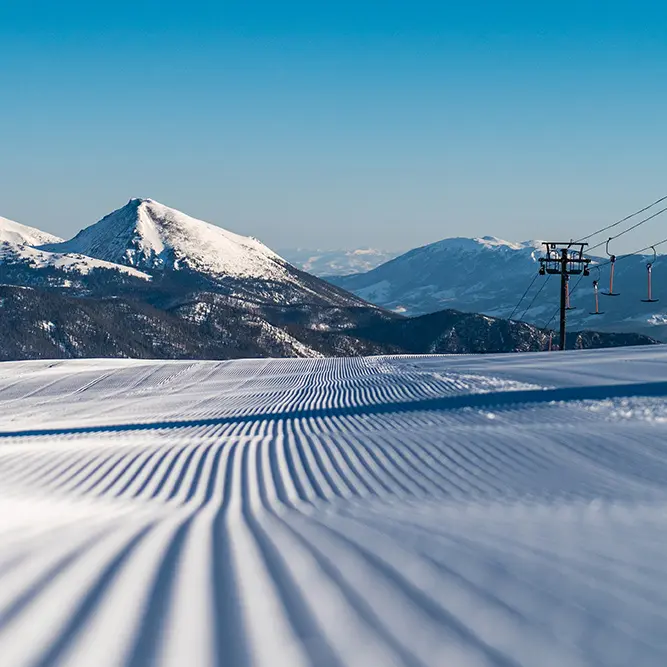
Be aware of the difference between groomed versus ungroomed terrain. When the terrain is freshly groomed, it will be more even in texture similar to “corduroy”, however, once the fresh groom has been skied it will start to resemble ungroomed terrain. Ungroomed terrain is variable and can include bumps, grooves, and inconsistencies.
Skiers and riders should know the difference between easier (green), more difficult (blue), most difficult (black and double black), and extreme (EX) terrain.
7. Weather
Weather can affect snow surfaces greatly. As temperatures vary throughout a day, particularly during spring months, different hazards can present themselves that guests should be aware of when skiing or riding. Winter snow can accumulate throughout the ski day during periods of heavy snowfall, refilling your tracks between runs, changing the snow surface, and hiding rocks and stumps that may have been visible earlier in the day. While spring mornings can have firm conditions, with softening of the snow as the sun and warmth of the day take effect.
8. BACKCOUNTRY WARNING
Copper Mountain has one backcountry access gate located off West Ten Mile ski trail on the west side of the resort. Pursuant to the Colorado Ski Safety Act, Copper Mountain assumes no responsibility for skiers going beyond the ski area boundary. Areas beyond the ski area boundary are not patrolled or maintained. Avalanches, unmarked obstacles, and other natural hazards exist. Be aware: the backcountry avalanche hazard may be extreme. Rescue in the backcountry, if available, is the responsibility of the Summit County Sheriff in conjunction with Search and Rescue, and 911 should be called for any emergency beyond the ski area boundary. It may be costly, it may put rescuers at risk if it is even considered safe for them to commence a rescue, and may take an extended amount of time. For current local weather and avalanche conditions, contact the Colorado Avalanche Information Center hotline sponsored by the Summit County Sheriff’s Office at 970.668.0600. Know Before You Go and use all available resources for up-to-date conditions. Follow Colorado Avalanche Information Center (CAIC) here: avalanche.state.co.us.